
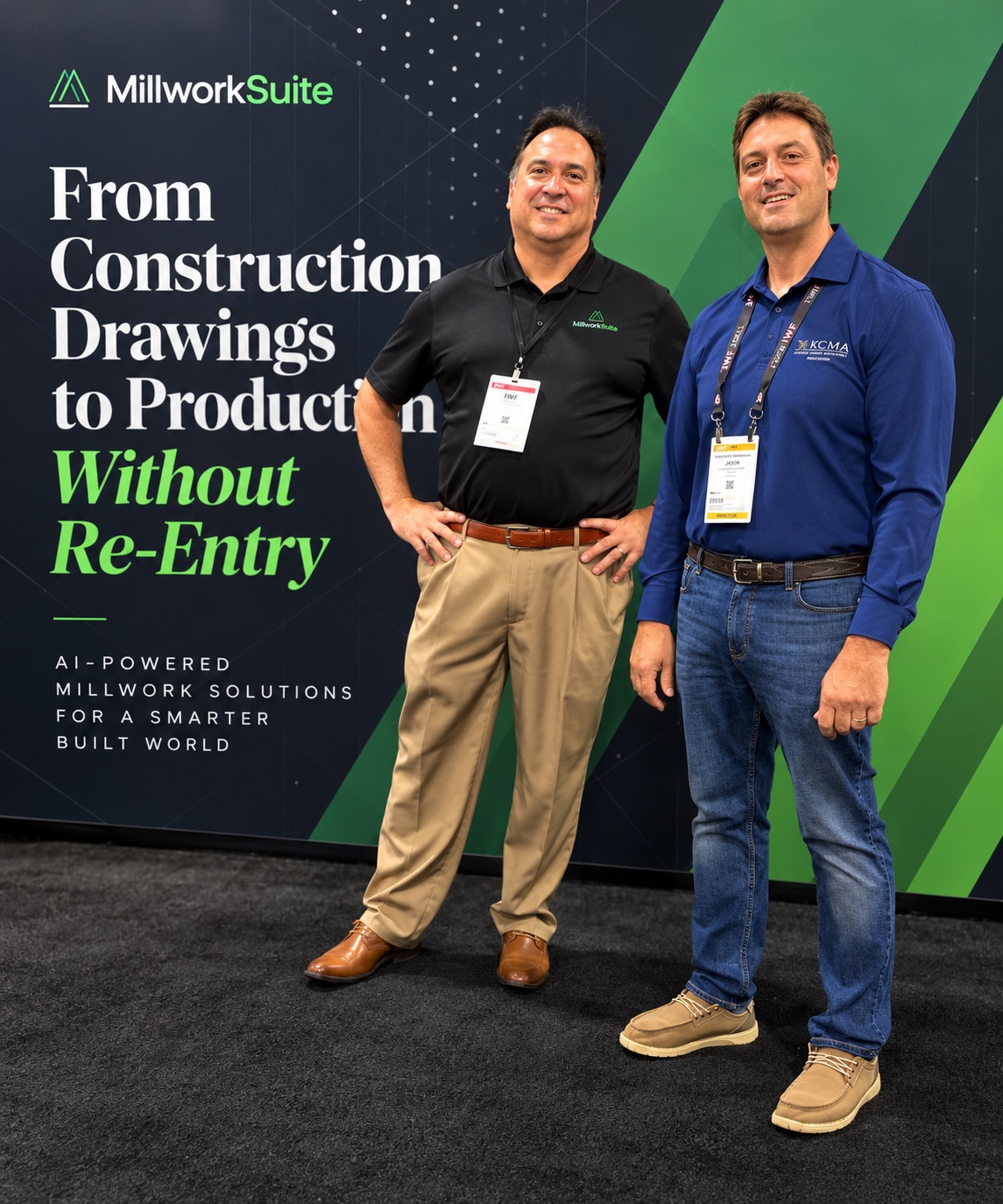
Technology as human amplification
The piece is careful to frame this as augmentation, not replacement. The scenario he describes: estimators spending less time on repetitive re-entry and more time on the judgment calls that actually need a person — evaluating scope, assessing risk, reviewing constructability, deciding strategy. Engineering and production teams receiving better-organized information earlier, instead of reconstructing it from scratch.
AI's practical role
Rather than dismissing AI or overselling it, Athanasakos lands somewhere more useful: construction documents already contain most of the information a shop needs, and practical AI — the kind built for a specific industry rather than a general demo — can help identify it, organize it, and carry it forward. The companies building that connective tissue now, he suggests, are the ones setting the digital workflow the rest of the industry will eventually run on.
The connected workflow he envisions
He lays out the fuller chain worth connecting, end to end:
- Construction Documents
- Preconstruction
- Estimating
- Engineering
- Procurement
- Manufacturing
- Installation
- Actual Performance
No single product closes that whole chain overnight — but every connection point that does get closed moves the industry forward.
Continuity — of information, between departments, and between what's understood during estimating and what actually reaches manufacturing.
Continuity is the real product
That word, continuity, is the concept the whole piece keeps circling back to. As manufacturing equipment gets more sophisticated, Athanasakos argues, the information feeding it has to become equally sophisticated — otherwise the machine is only as good as the spreadsheet or markup that fed it. Better information, not just faster machines, is what he thinks actually defines the next few years of this industry.
How real innovation happens
He credits genuine progress to people willing to keep asking uncomfortable questions: Can we connect this? Can we automate this step? Can we cut the manual re-entry out of this handoff? Can we make this information clearer for whoever receives it next? Can we build a better tool instead of a better workaround? Companies like MillworkSuite, in his view, aren't just participating in today's industry — they're testing what tomorrow's version of it looks like.
The ICMS lens
Athanasakos founded ICMS LLC — Innovative Construction & Manufacturing Solutions — to work the connections between construction, preconstruction, estimating, engineering, manufacturing, technology, people and business performance. His read on architectural millwork's biggest opportunity isn't that current practice is wrong; it's that the tools available are changing fast enough to open possibilities that didn't exist a few years ago.
Looking forward
He closes by posing the question he says he can't stop thinking about: what does a genuinely connected millwork company look like five to ten years out? How much information moves automatically instead of by hand? How much repetitive re-entry disappears? How much earlier does risk get caught? How much faster does information travel from construction documents through engineering into manufacturing? And how much more time does that free up for experienced people to actually think, instead of just relaying information from one stage to the next?
Athanasakos thanks the MillworkSuite team, and Rob Hull specifically, for the conversation at IWF 2026 — and ends on the idea that the future power of manufacturing technology may end up mattering less than the information systems that connect it.